Reducing Heat Loss from a High-Country Heating System
A specialist insulation project designed to improve heat retention and reduce energy loss from the boiler supplying Lake Ōhau Lodge’s central heating system.
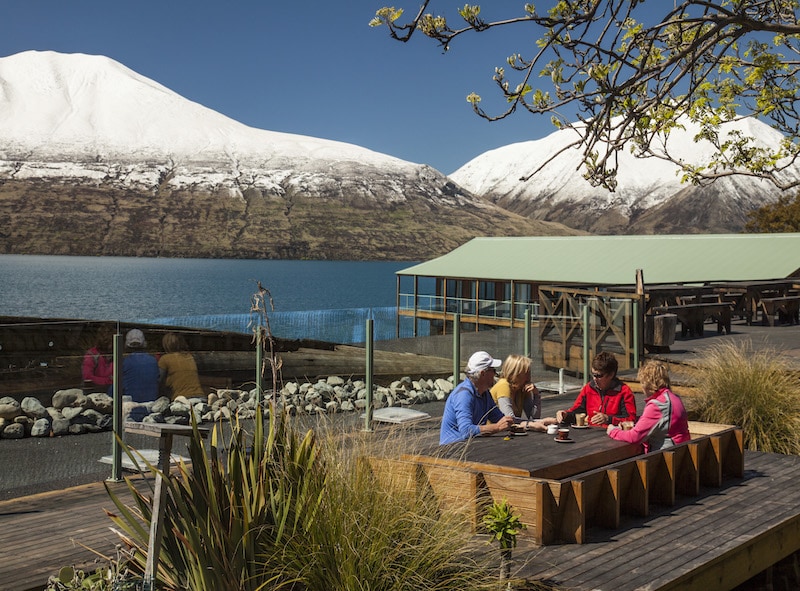
Located in the Mackenzie High Country, Lake Ōhau Lodge is a well-established accommodation and hospitality destination operating in a challenging high-country environment. The lodge relies on a central hot-water heating system to provide warmth throughout the complex, making effective heat retention an important part of the building’s overall heating performance.
NZ Foam insulation was brought in to address heat loss from the lodge’s boiler, helping retain more of the heat generated for the central radiator system. The application presented a unique challenge, with the boiler’s curved profile making it difficult for conventional insulation products to provide consistent coverage.
NZ Foam insulation provided a practical solution by moulding directly around the boiler and creating a continuous insulating layer. This allowed the irregular and rounded surface to be fully covered without the joins and gaps associated with more traditional insulation methods.
The Lake Ōhau Lodge project demonstrates how NZ Foam insulation can be used beyond conventional building applications, providing a high-performance insulation solution for specialist equipment and challenging surfaces where controlling heat loss is important.
R3.2 NZ Foam Wall Insulation
Questions about this project
This project was completed at Lake Ōhau Lodge, a family-run accommodation lodge and hospitality complex located at Lake Ōhau in New Zealand’s Mackenzie High Country.
The main goal was to reduce heat loss from the boiler and heated water used by the central radiator heating system throughout the lodge complex. By insulating the boiler, the project aimed to retain more heat, reduce energy waste and improve the efficiency of the heating system.
NZ Foam insulation was chosen because it was the only insulation product that could effectively mould to the shape of the boiler. This made it possible to achieve complete coverage around the curved surface.
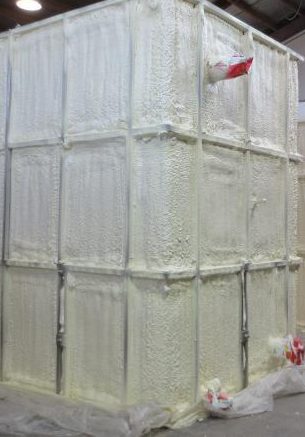
NZ Foam spray foam was installed around the outer liner of the boiler, providing an insulating layer over the heated surface.
The boiler received 75 mm of spray foam insulation, achieving an R-value of R3.2.
Other insulation options would not have been able to perform to the same level for this application. Spray foam provided a seamless insulating coating with no joins or gaps, while also conforming closely to the boiler’s curved shape. This provided more consistent coverage and made it better suited to the boiler than conventional insulation products.
The key challenge was insulating the boiler’s round profile. The curved surface made it difficult to achieve a close, continuous fit using conventional insulation. NZ Foam solved this by spraying the insulation directly onto the boiler, allowing it to mould around the round profile and form a seamless insulating layer.
This project shows that spray foam can be an effective solution for insulating unusual, curved or difficult-to-access surfaces where conventional insulation may struggle. Its ability to mould to the surface and create a seamless coating with no joins can provide more consistent insulation coverage and help reduce heat loss. For builders and designers, the key lesson is to consider the shape, access and performance requirements of the application when selecting an insulation system—not just the insulation material itself.